The best footwear for working in a professional kitchen is a closed shoe with a certified slip-resistant sole (marked SR or SRC) that resists oils and grease, a non-absorbent upper, good cushioning, and a removable insole.
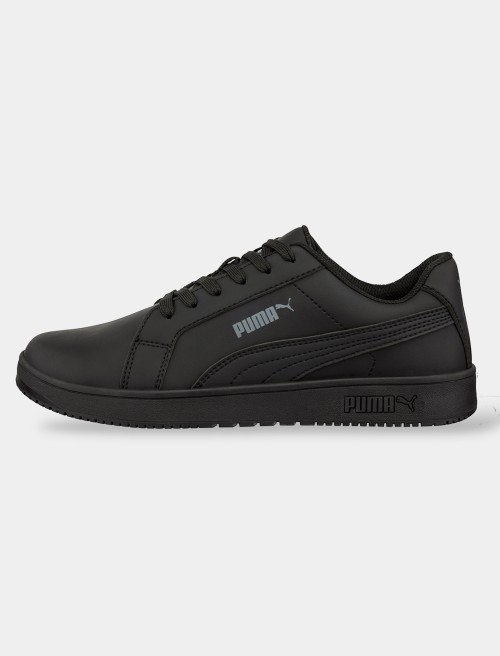
Polyurethane clogs, technical hospitality sneakers, and Oxford work shoes can all meet these requirements. The right choice depends on your role, how much you walk during a shift, and the image you want to project.
Step 1. Identify the risks in your role
Every position in the kitchen has its own main hazards, and your footwear should be chosen accordingly. On the hot line, the main dangers are grease on the floor and oil splashing from the pan. In the dishwashing area, it is constant water exposure. In pastry, it is spending hours standing in one spot. This table summarizes the main risk in each area and what to prioritize:
| Position | Main risk | What to prioritize | What to choose |
|---|---|---|---|
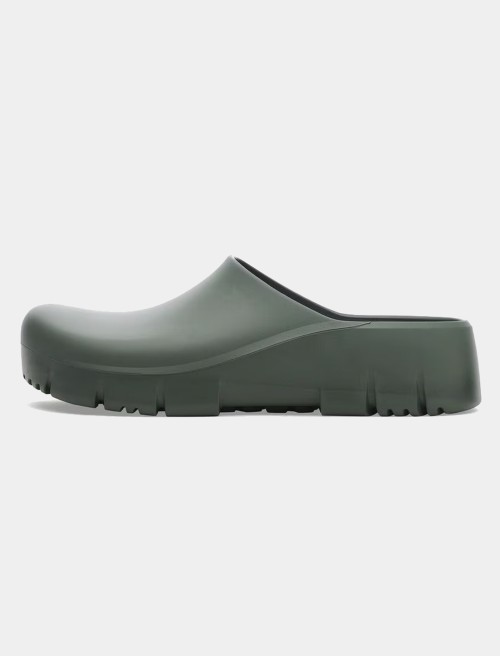
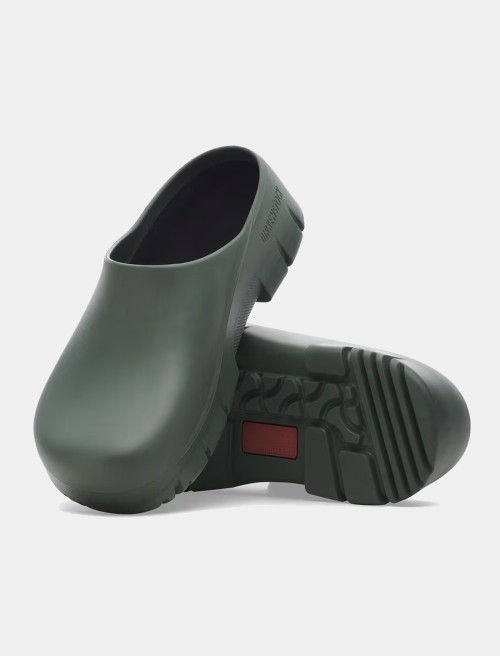
| Hot line, griddle, fryer | Grease on the floor, hot splashes | Oil-resistant sole, closed upper | Super Birki 2.0 |
| Bakery, pastry, production | Long hours standing, boxes and carts | Cushioning and lightweight reinforced toe cap | Puma Bounce |
| Dishwashing area and sink | Constant water exposure | Water-repellent footwear that is easy to clean | Condor |
| Cold prep, walk-in cooler | Standing still in one place | Arch support and anatomical insole | Boston Pro |
| Open kitchen, chef working in the dining room | Appearance in front of customers | Technical sole with a streetwear look | Oxford |
When the kitchen is open to guests
When the kitchen is open to the dining room, the uniform is no longer hidden from view, and footwear becomes part of the overall look. Grease-stained shoes send the opposite message to the one you want your food to convey. Choose models that can be wiped clean in seconds between services, and keep a pair exclusively for kitchen use rather than wearing them outdoors.
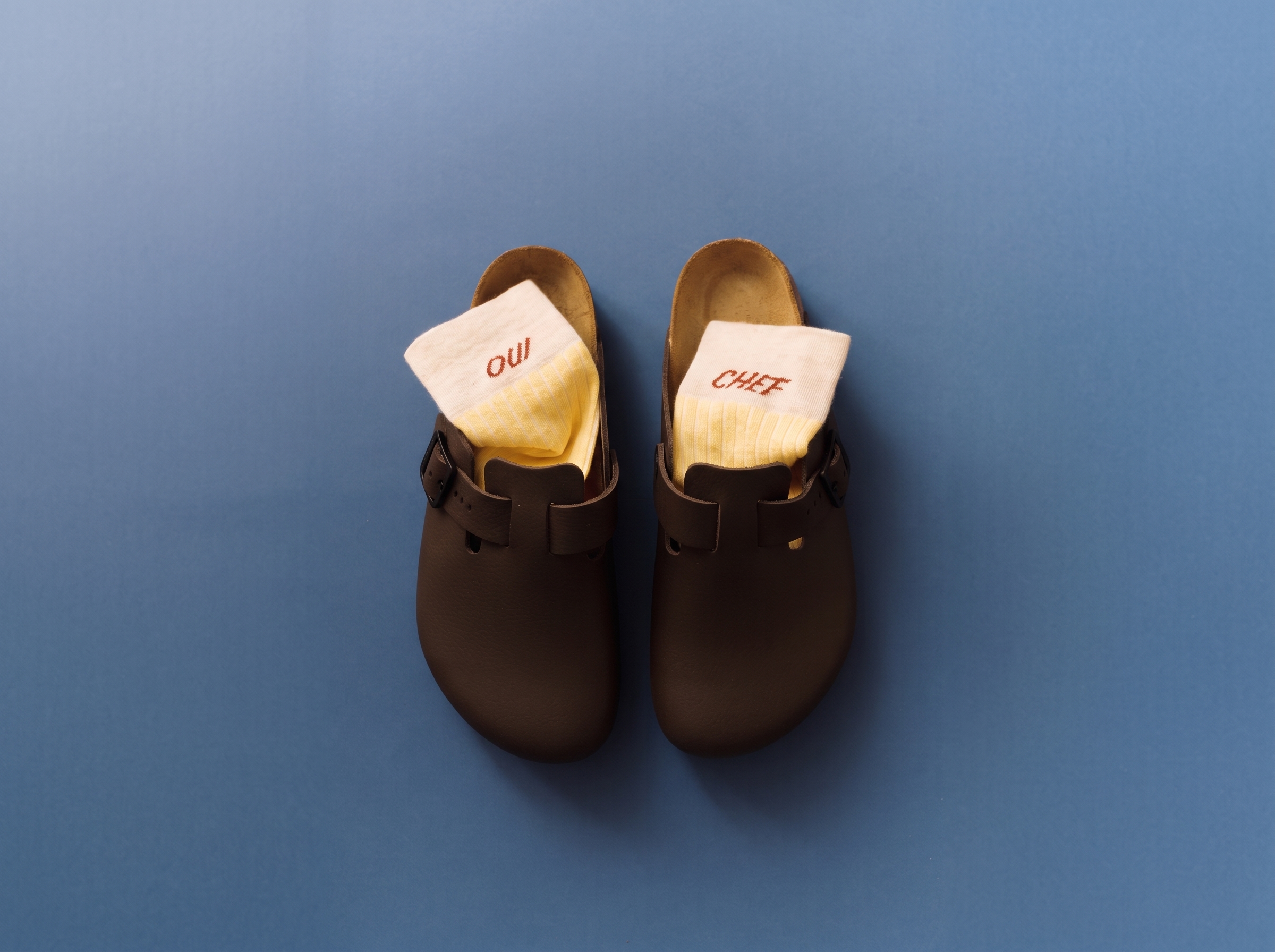
Two options offer technical soles without looking like technical footwear: leather clogs such as the Boston Pro, or lace-up Oxford-style shoes such as the Black Oxford Shoe, with a leather upper and slip-resistant sole.

Step 2. Check the sole: certification, material, and tread
In Europe, occupational footwear is certified under EN ISO 20347, while safety footwear with a protective toe cap is certified under EN ISO 20345. Until 2022, slip resistance was identified by three markings:
- SRA: tested on ceramic tile with detergent.
- SRB: tested on steel with glycerin.
- SRC: passes both tests.
The INSST explains that the 2022 versions of these standards removed those three markings and introduced SR. This is awarded after passing an additional test on ceramic tile with glycerin, which more closely resembles a greasy kitchen floor than the old steel test. Shoes certified as SRC under the previous standard remain valid; they simply passed a different test.
In its guide Stop slips in kitchens, the HSE recommends three checks that any head chef can carry out:
- Test before buying for the whole team. Footwear marked as slip-resistant may not perform equally on every floor.
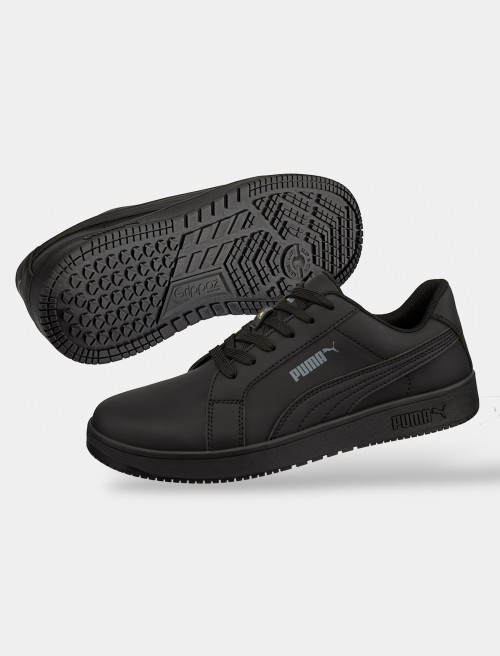
- Check whether the tread clogs. If food debris constantly gets stuck in the grooves, the footwear is not right for that kitchen, even if it grips well on wet surfaces.
- Prioritize a flexible sole with plenty of tread edges. The more edges the tread has, the better the grip.


Step 3. Look for cushioning and arch support
Podiatrist Damian Mather explains in Hospitality Magazine that the most common issue among chefs is plantar fasciitis, an overload injury affecting the band of tissue running along the arch of the foot. During a shift, chefs spend hours standing with very little movement, which can put more strain on their feet than walking. His conclusion is simple: it largely comes down to arch support.
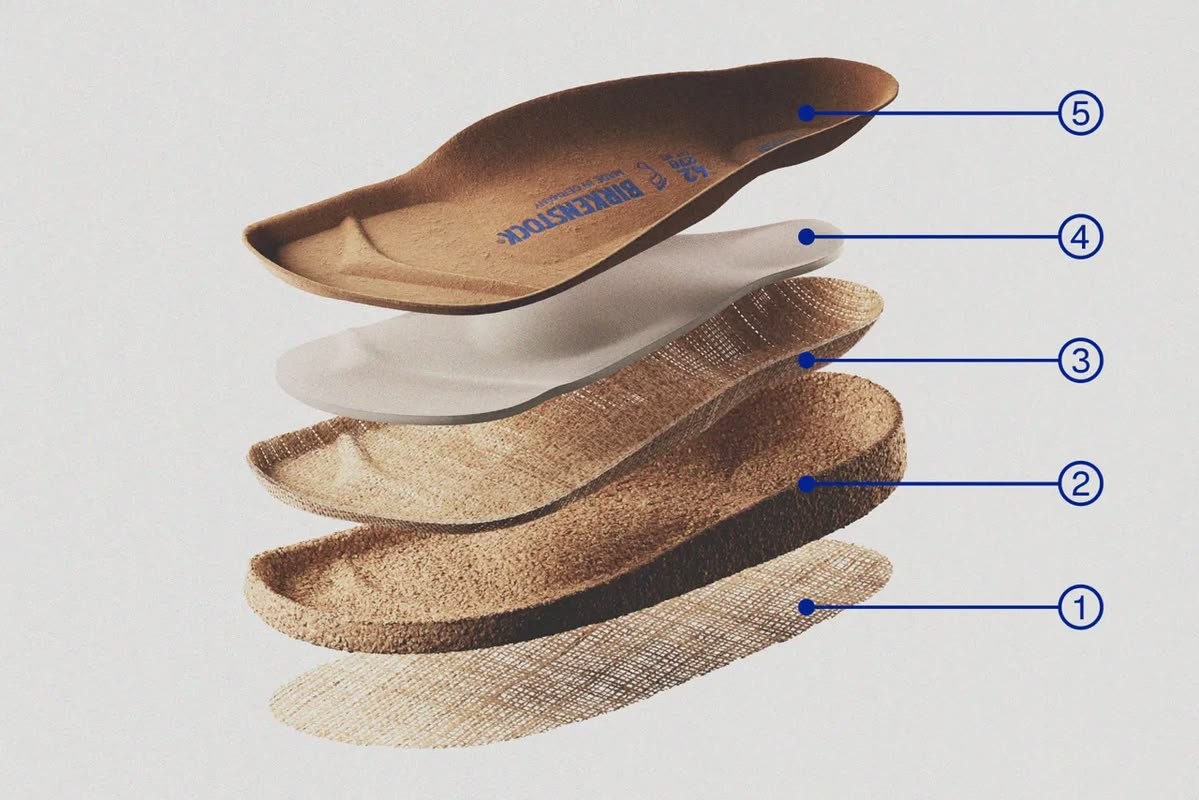
Mather warns that many reinforced kitchen shoes are heavy and flat inside. Replacing the standard insole with one that supports the arch can make a real difference. Cork insoles, such as those in the Super Birki 2.0, adapt to the shape of your foot over time.
Step 4. Protect your feet from splashes and impacts
- The upper: your first line of defense against splashes
This is the part of the shoe exposed to oil, stock, and cooking water. The thick natural leather on the Tokio Pro clog withstands years of splashes, while the microfiber upper on the Puma Blast is lighter and resistant to water, grease, and detergents.
- The toe cap: optional, but not always
In bakeries, production kitchens, and walk-in coolers, where boxes, carts, and large pots are moved around, a reinforced toe cap can prevent accidents. Steel toe caps, such as those on the Birkenstock QS 400, offer maximum protection. Fiberglass toe caps, such as those on the Puma Bounce, provide protection without the weight of steel.
Step 5. Maintain your shoes and know when to replace them
Kitchen shoes rarely break all at once. They wear down gradually, and your feet get used to the changes. Chefs at America’s Test Kitchen who wear clogs every day say they replace them every one to two years. These signs indicate that it is time for a new pair:
- The tread is smooth at the heel or under the ball of the foot.
- Cracks appear in the sole, especially where the toes bend.
- Your heels, arches, or lower back hurt at the end of a shift when they did not before.
- The insole has flattened and no longer springs back into shape.
- Moisture gets through the upper, or the leather has cracked.
Three habits can extend the life of your footwear:
- Alternate between two pairs so each one can dry for 24 hours.
- Clean the soles daily so debris does not block the tread grooves.
- Remove the insoles to wash or air them separately.
Footwear is the part of the uniform that works the hardest and is often the last thing people think about. At QOOQER, we can help you choose the right models and sizes for every role, with no minimum order.
Frequently asked questions
What footwear is required in a professional kitchen?
It depends on the country and the risk assessment for each kitchen. As a reference, the UK HSE states that if a slipping risk remains after other control measures have been taken, slip-resistant footwear may be considered personal protective equipment and must be provided by the employer. In Spain, the INSST notes that the occupational safety specialist should select the appropriate footwear following a risk assessment.
What does SR mean on work shoes?
SR is the slip-resistance marking introduced in the 2022 versions of EN ISO 20345 and EN ISO 20347. It indicates that the sole has passed a test on ceramic tile with glycerin, simulating a greasy floor.
Is SR better than SRC?
They cannot be compared directly because they refer to tests under different versions of the standards. SRC was the most comprehensive category under the previous standard and remains valid; SR is the additional test under the current standard. Both are suitable for kitchen use when the footwear meets the relevant requirements.
Are clogs or sneakers better for cooking?
Clogs are easy to clean and put on, and many have anatomical insoles. Work sneakers are lighter and provide better heel support. For stations that involve lots of movement, sneakers are usually preferable; for fixed positions and very wet areas, closed clogs can be a good choice.
How do you clean kitchen shoes?
Clean the sole with a brush, hot water, and soap. Remove the insole and clean it separately. PU clogs can withstand high-temperature washing; leather footwear should be cleaned with a damp cloth and a suitable leather-care product.
How long do professional kitchen shoes last?
With daily use, one to two years is typical. The clearest sign is the sole: once the tread wears smooth, the grip is no longer the same.